Look, I get it- I am typing and you are reading this article on a laptop, tablet, or phone screen as we speak! There’s no escaping technology- it’s everywhere. Pings, notifications, Alexa reminders, and phone calls (even if we have had our phone on Do Not Disturb for years!) are inescapable during our day-to-day routines. We check Waze to get ready for the murky commute to work, scroll TikTok while in line for our coffee, and text back and forth with a friend about that latest episode of that juicy, limited series on Netflix.
But is our world too connected? And if we’re bombarded with screens and sounds beckoning our attention away from the task at hand, sometimes multiple times in the span of a minute, how can we be present with what’s right in front of us? Sarah Chauncey, an editor of memoirs and nonfiction works, describes presence as ‘a way to train the mind to serve the heart’. Borrowing from the spiritual teacher and author Eckhart Tolle, she assets that presence allows us to ‘use the mind as a tool that one can put down what is not needed’
I adore this definition. It’s simple, to the point, and gets to the heart space, which is something my clients hear me describe (perhaps to the point of being repetitive!) in our sessions together. I notice the following dynamic far too often in individuals I work with: they find themselves ‘doomscrolling’ for hours on a smart phone after spending all day looking at a computer screen, sometimes even eating at their desk, hunched over a keyboard. This preoccupation with our gadgets can be even more insidious with couples- date nights are replaced with side-by-side TV watching, only many times, one or both is still scrolling their phone! We are so inundated with the quick dopamine hit from these devices, that we interrupt our attention on one to turn towards another, without us even being aware of it.
Now, I’m not anti-technology
I work remotely for a university on the West Coast and see almost half my clients virtually. The world of wireless internet, cloud storage, and shared documents have allowed me to flourish in my career as a counselor and counselor educator. And on a personal level, I love being able to open my MacBook and smile at a funny text in one of my many group chats. It can provide levity in my day! But far too often, I’ve seen where many of us struggle to turn away from the very eye-straining screens that we spend hours on each day, only to find ourselves cranky, disconnected from ourselves, and worst of all, our friends, families, and partner(s). Is that a life we want to live? Do we feel refreshed and rejuvenated after doing that for the majority of our day?
Helpful ways to connect while living in a technology saturated world
If you’re struggling to find connection with yourself or loved ones in the day and age of AI-everything and Insta-you name it, I have some suggestions below! They’ve helped my household, my loved ones, and my clients get to a place of balance and finding time to once again enjoy the present moment.
- Consider a cut-off time before bed: Even if we spent most of our day on screens and computers of all shapes and sizes, having a ‘wind down’ time of night to slow our brains and bodies down does wonders for our stress-levels. Consider a ritual that might make this easier- would washing your face be a sign of wind down time? What about a soothing scent in a diffuser or even turning on a humidifier? Consider picking up a book or listening to soothing noises like Sleep music on Spotify (Hey, we can use technology to our advantage, too!) to decompress from the day.
- Get curious with your thoughts and feelings: When you find yourself wanting to pick up your phone or tablet, ask yourself what’s happening in your body right now? Here’s an example of how I’ve managed to do this with lots of practice! What am I feeling right now? Hmmm, my brain is ‘buzzing’ and my heart rate is increased….I think I’m overstimulated and a bit stressed with the past few hours. I’m noticing I might be thirsty and hungry. It feels like I need something to slow my brain down…maybe I can step away from the computer and take my dogs on a walk! I cannot emphasize enough how helpful it is to slooowwww dowwwwnnn our automatic reactions to tuning into yet another feed, or algorithm, or video! When we slow down, we find the next right thing to do that will serve us in our journey to feeling whole and healthy.
- Implement healthy boundaries when spending time with loved ones: Many couples I’ve worked with have a ‘no-phone’ policy during date nights or important moments together. In fact, when I’ve seen relationships start to heal as partner(s) find closeness again, they want to turn towards rather than away from one another. They find joy in going to grab a meal, coffee, go for a walk, or even connect about their days while cleaning the kitchen. Some even come back and tell me, ‘Dr. Mason, I don’t even really miss scrolling my phone or browsing Reddit…my time feels so much better spent!’
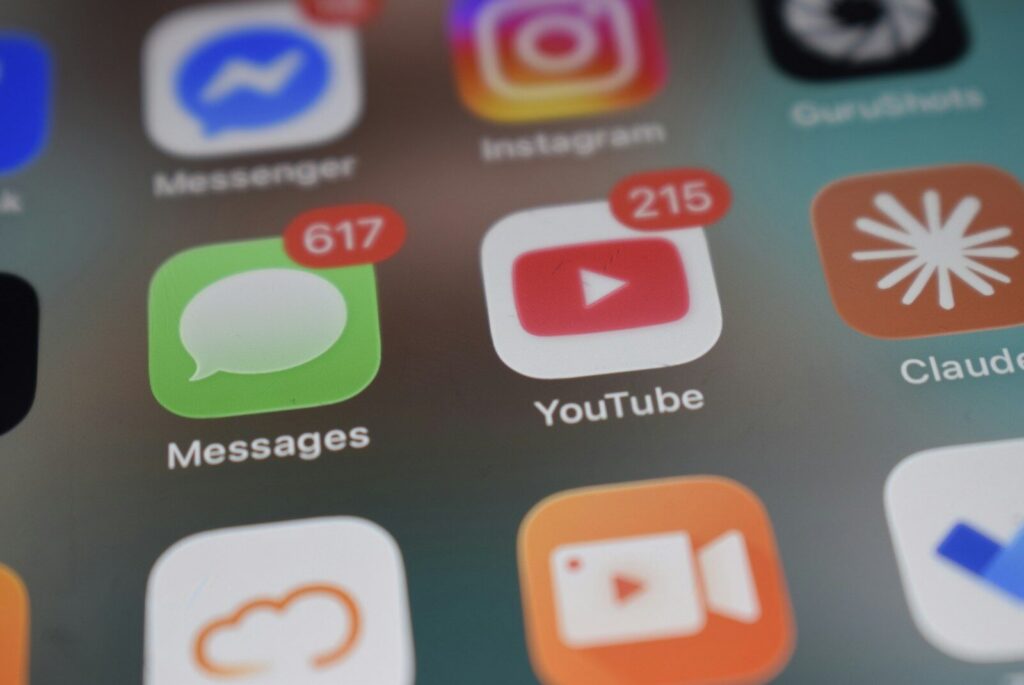
- Focus on one thing at a time. Look, as someone who is neurodivergent and has dealt with a busy brain for decades, I completely understand how hard of an ask this is. Think of it more as an invitation to be curious in the present moment, (remember our earlier definition?!) asking yourself ‘Is this serving my mind, body, and spirit to give attention to [x],[y], AND [z]? For example, when I am doing notes for clients or grading my students’ work, I notice the little red box with a number in it on my Messenger app. Ooop- a text! Then I see that blue dot telling me Outlook has a new email for me. It’s so tempting. My brain’s initial response is ‘Look now- a new, shiny thing!’. But 99 times out of 100, I feel so much better in the long run if I stay present with what’s in front of me. Sometimes, I might even say out loud ‘Okay, I’m now focusing on [initial activity that required my attention]’ to bring me back to the present moment. I think of it like a bank deposit in an investment account- it might feel weird at first to make a deposit of my attention on a thing that feels boring (It’s hard to see how a retirement account will pay out dividends in time when we just got paid or started a new job!), but similar to compound interest, I’m investing in my future well-being by preserving my brain energy to focus on the things that matter.
Therapy can help you reconnect
Therapy can also help with focusing our attention on our internal selves- a welcome refuge from the constant distraction of the modern world around us. If you’re having difficulty staying on task, understanding your inner world, or connecting with your partner, the distraction of technology might be just the tip of the iceberg. At The Relationship Center, we can help you find the root cause of your discomfort and disconnection. We’ll give you real, evidence-based approaches to help you find more meaning in your life and relationships. When we feel more authentically connected to ourselves and others, our world makes more sense. Suddenly, the hurdles that life inevitably throws at us will less scary with our mighty village! Reach out today for a free consultation!
Meet Nathaniel Mason, PhD, LPC, NCC: Dr. Nathaniel Mason is a counselor and educator who brings extensive clinical experience and a compassionate, nonjudgmental approach to relationship therapy. He integrates the Gottman Method and Emotionally Focused Therapy (EFT) to help individuals and couples strengthen emotional connection, navigate conflict, and build healthier relationships. Dr. Mason has specialized expertise in LGBTQIA+ relationships, consensual non-monogamy, and kink-affirming therapy, creating a welcoming space where clients can explore their identities and relationships with authenticity and confidence.